DogeThrift · Spending Guide
Dogecoin Subscription Services: Netflix, Spotify and VPNs You Can Actually Pay For With DOGE
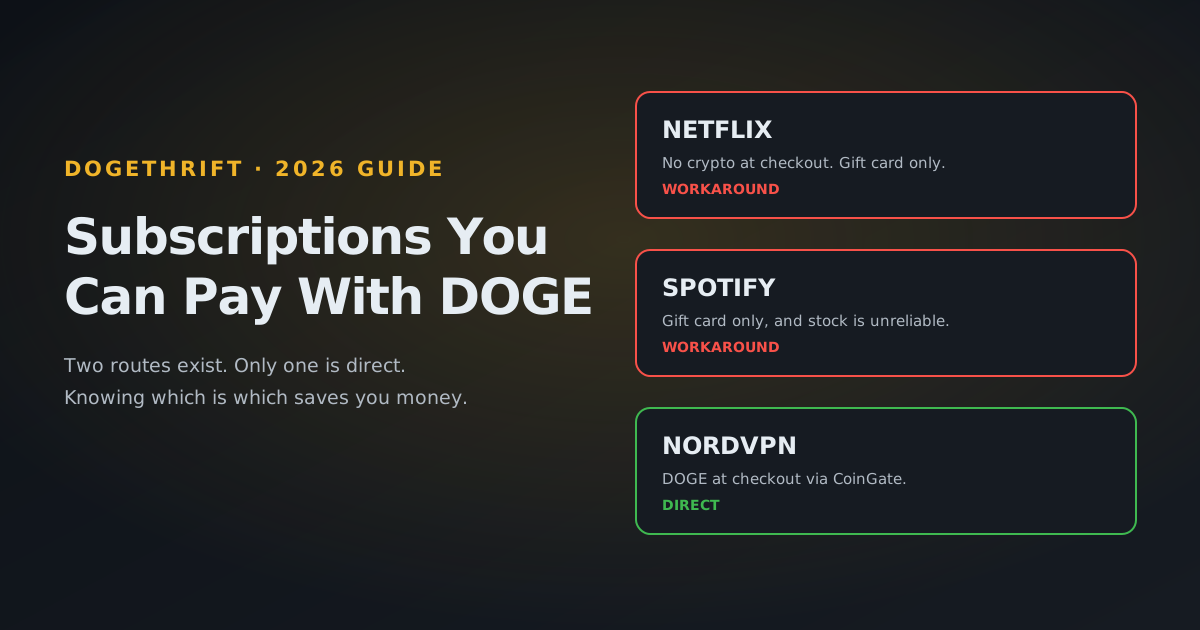
One category takes Dogecoin at the checkout screen: VPNs. Everything else on the usual "subscriptions that accept DOGE" list is a gift card in disguise. Netflix and Spotify have never accepted cryptocurrency and still don't. That distinction matters, because the two routes cost different amounts, fail in different ways, and only one of them can renew by itself.
The short answer
NordVPN takes Dogecoin at checkout through CoinGate. That is direct acceptance, and it's the cleanest answer on this page.
Netflix and Spotify do not accept cryptocurrency and show no sign of starting. You reach them by buying a gift card with DOGE on Bitrefill and redeeming the code. That works, it's cheap, and it is not the same thing as the company accepting Dogecoin. Anyone telling you "Netflix accepts DOGE" is describing a third party's checkout, not Netflix's.
Mullvad, the privacy VPN people usually assume is the most crypto friendly of the lot, flatly does not take DOGE. It takes exactly three coins and Dogecoin isn't one of them.
Rule: if the merchant's own payment page doesn't name cryptocurrency, you are looking at a gift card route. Price it as one.
Can you pay for Netflix with Dogecoin?
No, not at Netflix. Their payment methods page lists credit and debit cards enabled for recurring transactions, virtual cards in select markets, prepaid cards carrying a Visa, Mastercard, Amex or Discover logo, Netflix gift cards, PayPal, and partner billing through providers like Comcast, Verizon and T-Mobile. Cryptocurrency appears nowhere on it. Checked July 2026.
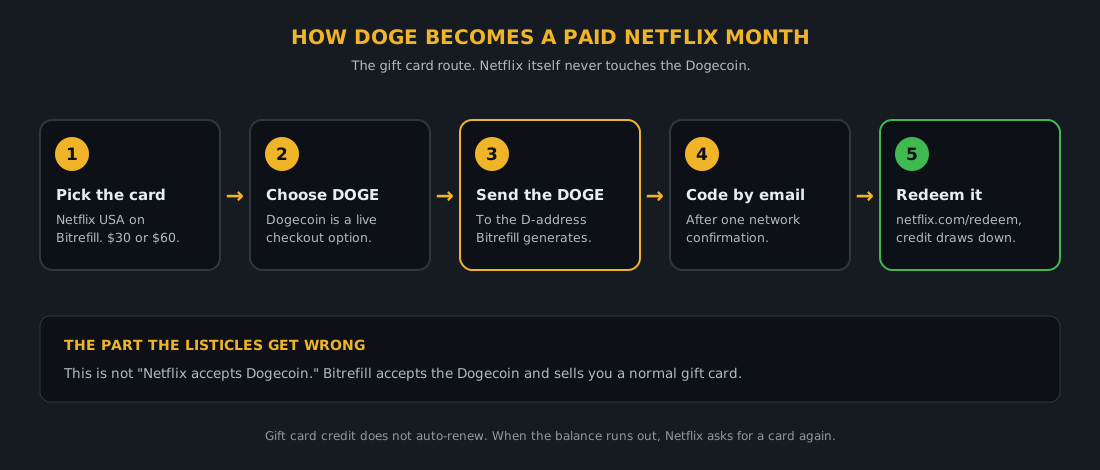
What does work is the gift card. Bitrefill sells a Netflix USA gift card in 30 and 60 dollar denominations and lists Dogecoin among its checkout assets alongside Bitcoin, Lightning, Ethereum, USDT, USDC, Litecoin, Dash and Solana. Pay in DOGE, the code lands in your inbox, and you enter it at netflix.com/redeem. Verified July 2026.
Two restrictions worth knowing before you buy
Bitrefill's Netflix product page carries a specific warning: the card can't be redeemed on accounts with discontinued plans. If you're on a legacy plan Netflix no longer sells, the code may not apply. Check what plan you're actually on before spending DOGE on a code you can't use.
The second restriction is structural, and it applies to every gift card route on this page. Gift card credit sits on your account and draws down month by month. It does not renew. When the balance hits zero Netflix asks for a payment method again, and you're back to buying another code. That's fine if you like the manual rhythm. It's a genuine annoyance if you wanted to set it and forget it.
Spotify: same route, thinner stock
Spotify's support page doesn't publish a fixed payment list. It says options vary by country and tells you to check the signup page for your location. Cryptocurrency isn't mentioned in any of it. Gift cards are, and that's the opening.
Here's where honesty matters more than a tidy answer. Bitrefill does list a Spotify Premium code for US accounts at 12.41 dollars for one month. When we checked in July 2026 it was showing as sold out, with the note that the item sold faster than expected. The Dogecoin badge also did not appear on that particular product page, though DOGE is confirmed as a site-wide checkout asset on Bitrefill's own crypto payments page. So treat Spotify as available in principle and unreliable in practice, and check stock before you plan around it.
The redemption terms are narrow too. The code applies to a full-price standalone Individual Premium subscription. It won't redeem against Family, Duo, or any discounted plan. If you're on a Family plan with four other people, this route is closed to you regardless of stock.
| Service | Takes DOGE directly? | Working route | Source checked |
|---|---|---|---|
| Netflix | No | Gift card via Bitrefill, $30 or $60 US | Netflix payment methods page |
| Spotify | No | Gift card via Bitrefill, often out of stock | Spotify payment methods page |
| NordVPN | Yes, via CoinGate | Pay DOGE at checkout | NordVPN payments article |
| Surfshark | Crypto yes, DOGE unnamed | Try checkout on desktop only | Surfshark payment options article |
| ExpressVPN | Unconfirmed, pages disagree | Verify at checkout before paying | Two ExpressVPN pages, conflicting |
| Mullvad | No, and no workaround | None. BTC, BCH or XMR only | Mullvad pricing page |
VPNs are the one category that takes DOGE directly
Privacy software has an obvious reason to accept cryptocurrency: the customers want to pay without handing over a card. So this is where direct acceptance actually lives.
NordVPN, the confirmed one
NordVPN's support article lists cryptocurrency alongside credit cards, PayPal, Sofort, bank transfers, prepaid cards, Apple Pay, Google Pay and the app stores. It doesn't name individual coins, which is why you have to follow the chain one step further. NordVPN's processor is CoinGate, a partnership running since 2022, and CoinGate's supported currencies page lists Dogecoin in its accepted-by-merchants column alongside Bitcoin, Litecoin, Ethereum, XRP, TRON, BNB, Polygon, USDC, Solana and EURC. Both checked July 2026.
Worth noting for calibration: CoinGate's own published breakdown of what NordVPN customers actually pay with puts Bitcoin at roughly 41 percent, USDT at 29 percent, Ethereum at 11.5 percent, Litecoin at 5.7 percent and TRON at 5.4 percent. Dogecoin doesn't make that top five. It's supported, but you won't be in a crowd.
Mullvad won't take your DOGE, and says so plainly
Mullvad lists its payment methods without hedging: cash, Bitcoin, Bitcoin Cash, Monero, bank wire, credit card, PayPal, Swish, EPS, Bancontact, iDEAL and Przelewy24. Three coins, and Dogecoin isn't one. They also run their own full node and self-host the wallets for each currency they support, which explains the short list. Adding a coin means running that chain's infrastructure.
There's no gift card escape hatch either, because Mullvad doesn't sell retail codes. If you want Mullvad specifically and you only hold DOGE, you're converting to Bitcoin or Monero first, or paying by card. One consolation: Mullvad discounts crypto payments by 10 percent, citing lower fees and less administration, so the conversion may still come out ahead of paying by card.
ExpressVPN and Surfshark: yes to crypto, unclear on DOGE
ExpressVPN is the messiest case on this page and a good example of why these claims need checking. Their marketing page for buying a VPN with Bitcoin is live and names BitPay as the processor. Their actual support article on accepted payment methods says you can pay by credit card, PayPal, Apple Pay, Google Pay and debit card, and mentions cryptocurrency nowhere. Two pages on the same domain, telling different stories, July 2026.
One more trap in that marketing page: it carries a long list of compatible wallets that includes Dogecoin Core. A wallet list is not a coin list. The presence of a Dogecoin wallet in a compatibility table tells you nothing about whether DOGE is a selectable currency at checkout. We're calling this one unconfirmed rather than pretending otherwise. If you want ExpressVPN, take the checkout to the payment step and look before you send anything.
Surfshark is cleaner but still incomplete. Their support page lists cryptocurrency as an accepted method with one specific caveat: it can't be used on mobile devices. No processor named, no coins named. Try it on desktop and read the checkout screen.
What each route actually costs
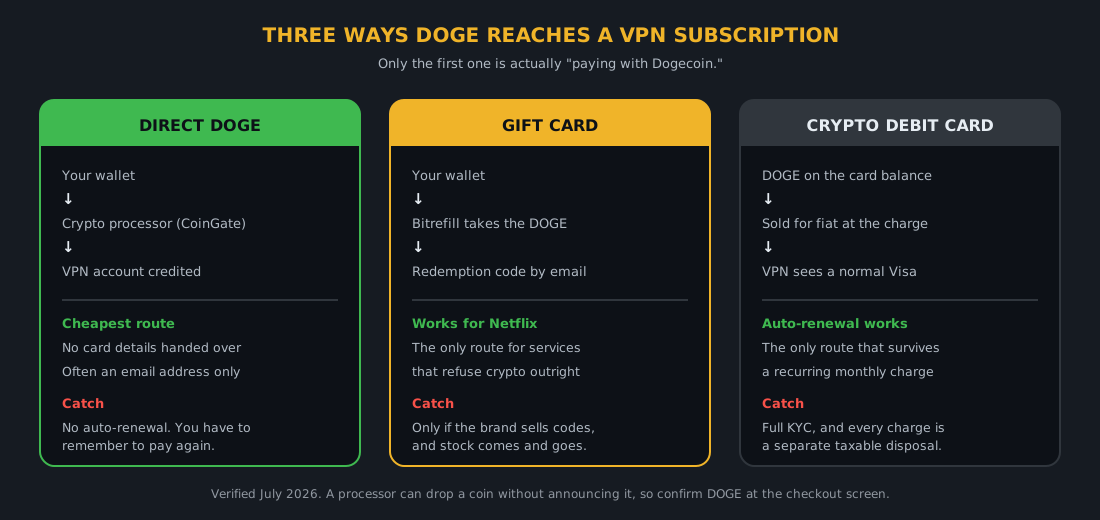
Direct crypto payment is the cheapest thing on this page because there's only one intermediary and the merchant is usually paying its fee, not you. Gift cards add a spread on top of face value. Crypto debit cards add a conversion spread at the moment of the charge, and sometimes a foreign transaction fee if the merchant bills in another currency.
| Route | Typical cost above face value | Auto-renews? | Taxable events per year |
|---|---|---|---|
| Direct DOGE at checkout | Lowest. Merchant absorbs processor fee | No | 1 per manual payment |
| Gift card bought with DOGE | Roughly 2 to 4 percent spread | No, credit draws down | 1 per card bought |
| Crypto debit card | Conversion spread per charge | Yes | 12 or more, one per charge |
| Sell DOGE, pay by bank card | Trading fee plus withdrawal cost | Yes | 1 per sale |
If you're paying one annual VPN bill, direct crypto wins on every axis. If you're paying six monthly subscriptions and you want them to run without you, a card is worth the spread. We compared the cards in detail in the crypto debit card guide, including which ones take DOGE as a funding asset.
The auto-renewal problem nobody mentions
This is the practical catch that turns a good decision into an annoying one three months later. Crypto payments are one-off invoices. A processor generates an address, you send coins, the invoice settles. There's no stored credential to charge again next month, which is exactly the privacy property people wanted, and also the reason your subscription quietly lapses.
Hosting and software companies hit this so often that several state it outright in their billing docs: crypto is not available for automatic recurring billing, pay each invoice manually. VPNs behave the same way. If you pay NordVPN in DOGE, put the renewal date in a calendar, because nothing else will remind you until the connection stops working.
Annual plans reduce the problem to once a year, which is the sane compromise. Pay twelve months up front in DOGE, set one reminder, move on.
Is paying a subscription with Dogecoin taxable?
In the US, yes. The IRS treats digital assets as property rather than currency, so spending DOGE is a disposal, and the gain or loss is the difference between what you paid for those coins and their dollar value at the moment you spent them. That's true whether you paid a VPN directly, bought a gift card, or swiped a crypto debit card.
The practical difference is volume. One annual VPN payment is one disposal to record. A crypto debit card covering half a dozen monthly subscriptions is 70-odd disposals a year, each needing its own basis calculation. Nothing about that is illegal, it's just bookkeeping, and it's the strongest argument for the annual-payment approach if you dislike spreadsheets. We go through the reporting mechanics, including what brokers now report about you, in the cash-out guide.
| How you pay | Disposals to record | Renewal risk |
|---|---|---|
| One annual VPN bill in DOGE | 1 | One calendar reminder a year |
| Monthly VPN bill in DOGE | 12 | Twelve chances to forget |
| Gift card codes, bought as needed | 1 per card | Service stops when credit runs out |
| Six subscriptions on a crypto debit card | 72 | None, it renews itself |
Common mistakes
- Trusting a 2021 article. Half the "companies that accept Dogecoin" lists still circulating were written during the last cycle and never rechecked. Companies drop coins without announcing it. Check the merchant's own page, then check the checkout.
- Reading a wallet list as a coin list. The ExpressVPN case above is the textbook version. A page can list Dogecoin Core among supported wallets while DOGE isn't a payment option at all.
- Buying a gift card for the wrong region. A Netflix USA code doesn't redeem on a European account. Pick the country before the amount.
- Buying a Spotify code for a Family plan. It only redeems on Individual Premium. Read the terms on the product page before spending.
- Assuming direct crypto payment will renew. It won't. Calendar reminder, or accept the lapse.
- Sending DOGE to a Bitcoin address. Processors generate a separate address per asset. A Dogecoin address starts with D. Check the first character every time.
Which route fits you
- Want a VPN and hold DOGE? NordVPN, direct crypto checkout, annual plan.
- Want Netflix? Bitrefill gift card, $30 or $60, redeem at netflix.com/redeem.
- Want Spotify? Check Bitrefill stock first, and confirm you're on an Individual plan.
- Want Mullvad specifically? Convert to Bitcoin or Monero. DOGE isn't happening, and the 10 percent crypto discount partly covers the conversion.
- Want six subscriptions running on autopilot? Crypto debit card, and accept the tax bookkeeping.
- Want to spend DOGE on something other than subscriptions? The verified merchant list covers the rest, and phone bills work through the same top-up mechanism.
Related on DogeThrift: the full gift card comparison, domains and hosting paid in DOGE, crypto debit cards compared.
Sources
- Netflix payment methods. Verified July 29, 2026. Lists cards, prepaid cards, Netflix gift cards, PayPal and partner billing. No cryptocurrency option.
- Bitrefill Netflix USA gift card. Verified July 29, 2026. $30 and $60 denominations, Dogecoin listed among accepted assets, discontinued-plan restriction noted on the page.
- Spotify payment methods. Verified July 29, 2026. Region-dependent options, no cryptocurrency named.
- Bitrefill Spotify USA gift card. Verified July 29, 2026. $12.41 for one month, showing sold out at time of check, Individual Premium only, no DOGE badge on this product page.
- Bitrefill accepted cryptocurrencies. Verified July 29, 2026. Dogecoin confirmed as a site-wide checkout asset.
- NordVPN accepted payment methods. Verified July 29, 2026. Cryptocurrency listed, individual coins not named.
- CoinGate supported currencies. Verified July 29, 2026. Dogecoin present in the accepted-by-merchants list.
- CoinGate NordVPN case study. Verified July 29, 2026. Confirms the 2022 partnership and the payment-share breakdown by coin.
- Mullvad pricing and payment methods. Verified July 29, 2026. Bitcoin, Bitcoin Cash and Monero only. Dogecoin not accepted. 10 percent crypto discount confirmed.
- ExpressVPN accepted payment methods. Verified July 29, 2026. Lists no cryptocurrency, contradicting their Bitcoin marketing page which names BitPay. Treated as unconfirmed for DOGE.
- Surfshark payment options. Verified July 29, 2026. Cryptocurrency accepted, no coins named, unavailable on mobile.
- IRS digital assets guidance. Verified July 29, 2026. Digital assets treated as property; disposals are reportable.